



 By
By 
500 years after the Scientific Revolution and 300 after the Enlightenment, people still lie awake at night tortured by the bad luck they think their superstitious transgressions may have brought upon their families.
‘I walked under that ladder on John Street in June and then in October my granny just so happens to get struck down in her prime – 102-years-old and healthy as a trout. And I’m supposed to call that a mere coincidence?!’
And here, who knows? Maybe they are right. Maybe these seemingly unrelated events are somehow cosmically entwined – and maybe Granny’s coronary was all their fault.
Perhaps in some future world, the causal link between a superstitious offence and its consequences will be as clear as fingerprints on a murder weapon.
Maybe people who step on cracks, break mirrors, and fail to take the necessary precautions against avian intruders will find themselves banged up behind bars doing hard time for the manslaughter of those closest to them.
But I tend to think not.
Another reason crimes of superstition will never stand up in court is because the chain of causality between the woo-woo offence and its supposed consequences will forever remain untraceable. The funny thing is, for believers, that incomprehensibility isn’t a flaw.
Rather than a weakness, it is a source of power. It’s sort of ‘God works in mysterious ways – and they’re not all good.’
Take, for example, the Old Testament flavour of the capriciousness and absurdity of being sentenced to seven years of bad luck for accidentally smashing a mirror.
It seems to me, with my mere mortal sense of justice, that the proportionate punishment should be – I dunno – maybe the loss of a perfectly good mirror.
Similarly, a person who lets a bird into the house probably learns about the importance of closing windows while scrubbing the pigeon’s legacy off the kitchen floor. The additional years of misfortune just seem like overkill.
But I wouldn’t be surprised if some profoundly superstitious people, faced with mortal punishment, cling to the thought that things could always be worse.
Standing above a floor of broken glass, with a shrug of the shoulders and a shake of the head, they probably say, ‘Well, at least it doesn’t carry a sentence of leprosy’.
Superstitions are also safe from legislation because they cannot be tested. At least not in a laboratory setting, because the scientific method requires variables to be created, controlled, and manipulated. Superstitions, of course, cannot be contrived. They have to happen organically; naturally, so to speak.
Which brings me to the core of this column – the bit where I make a genuine contribution to the subject of superstition.
At work the other day, a fella told me a story of such astonishing coincidence that most of you will think me a fool for believing it. But I’ve never caught him in a lie, and I have no reason to think he made it up.
He does the EuroMillions religiously, hoping someday his luck will come in and that he can see out his days in the pub, doing crosswords, backing horses, and drinking afternoon pints.
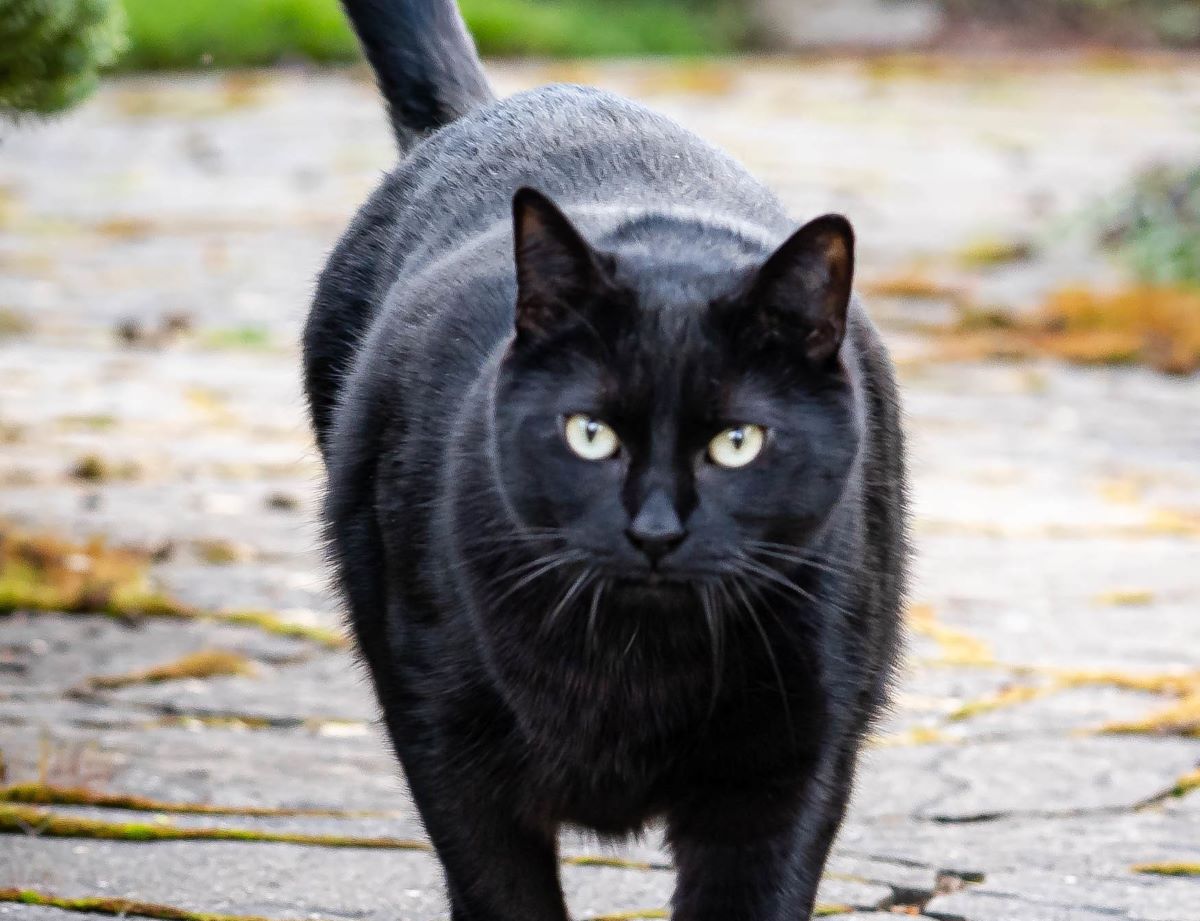
The other morning, a black cat crossed his path. In his house, this is a good thing. Or in his words, ‘A benevolent portent.’
On the way to the office, he heard a splash on the roof of the car. A gift from the heavens – and one that would have landed right on his bald spot had his sunroof not absorbed it.
Once at work, he went for a morning vape and claims he saw two magpies sitting side by side on the wall.
The first good omen I accepted without question. The second and third I pressed him on.
‘Are you serious?’
‘You’re winding me up.’
‘Do you think I’m that thick? Come on, man, tell the truth.’
But he stuck to his guns, swearing he wasn’t making any of it up.
The next morning, I texted to see if his numbers came up.
He replied, ‘Seems they forgot about me. Tonight’s not my night brother.’
To me, that is proof that superstition is a load of hocus-pocus rubbish. But some of you will argue the forces that be would never reward him in such a swift, predictable, and preferable manner.
My question then is this: How long do we have to wait to find out? How long can one expect to remain in a state of good grace when they cross a black cat, see a pair of magpies, and nearly get defecated on all in the space of a single morning?
If you get seven years of bad luck for smashing a mirror, the answer is probably… well, absolutely ages.
So, it looks like this experiment is still in progress, and will only conclude when Davy’s luck truly runs out.