





 By
By 
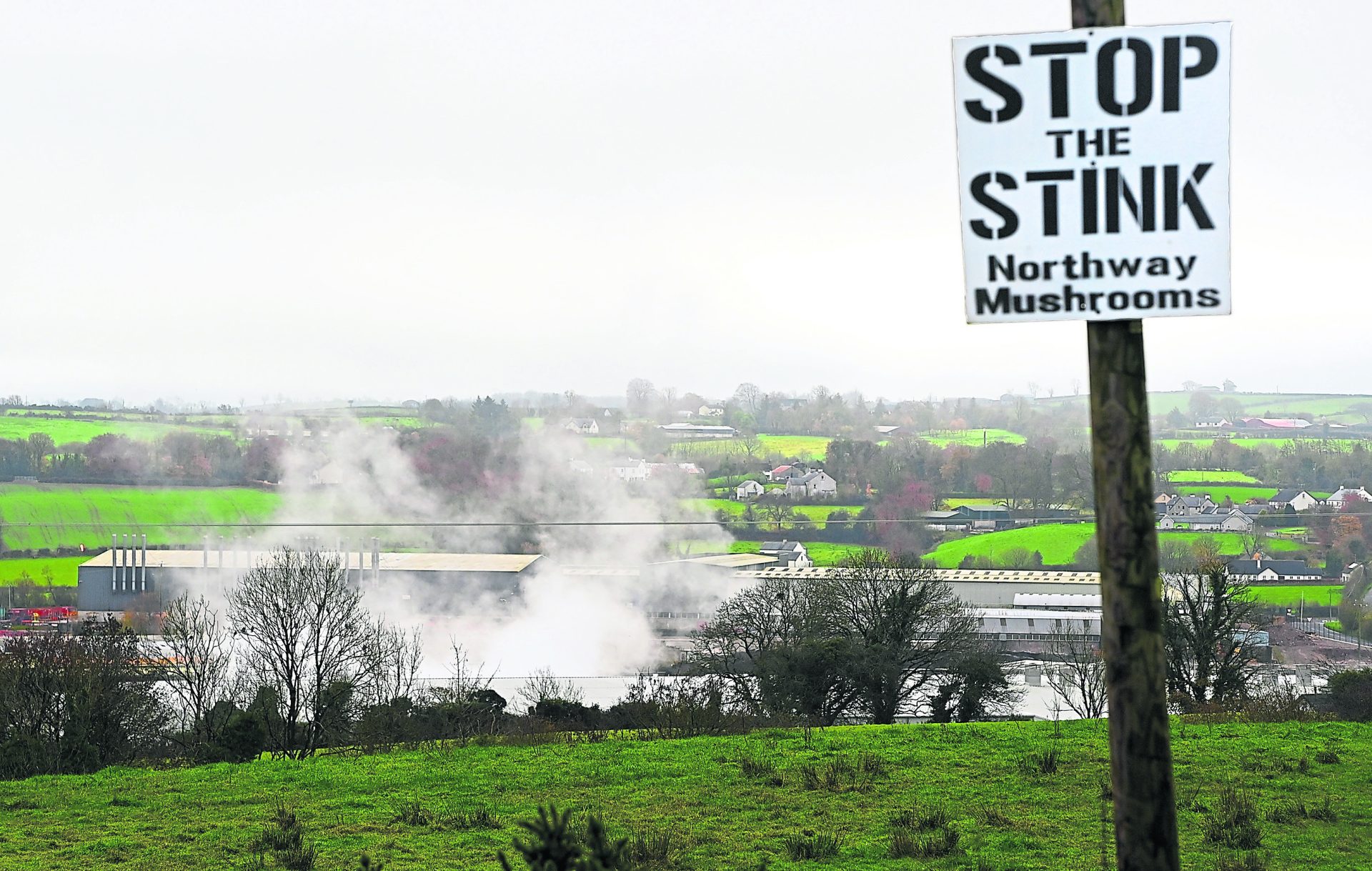
CLAIMS by the Northern Ireland Environment Agency that there has been a ‘notable reduction’ in complaints about odour from a mushroom compost factory in Killeeshil have been strongly rejected by local residents.
In correspondence to Mid Ulster District Council, NIEA chief executive, David Reid, stated that the site’s odour management strategy had led to a fall in the number of complaints.
But now campaign group, Cabragh Concerned Residents Association, have said the claims by Mr Reid do not ‘reflect the lived reality’ locally.
Members say they ‘completely reject’ the assertion over the number of complaints, but remain open to a meeting.
The group insists that it cannot accept ‘continued inaction, avoidance and the quiet normalisation of an ongoing environmental nuisance affecting their community’.
It has asserted that, since June 2025, there have been over 700 odour complaints and that they are continuing into 2026.
“These figures sit alongside thousands of complaints made over the past five years. The assertion that the situation has materially improved is simply not borne out by the evidence or by daily experience in the community,” the group adds.
“It is misleading to treat complaint volume as a reliable indicator of the absence of an environmental problem. Residents have been reporting this issue continuously for years. What NIEA presents as a ‘reduction’ is more accurately explained by complaint fatigue – an entirely predictable outcome when a public body repeatedly fails to respond, follow up or take visible enforcement action.
“Since June 2025, CCRA has actively tracked complaints submitted directly to the NIEA. Not a single complainant has received a response from NIEA. There has been no direct acknowledgement, no clear feedback and no indication of investigation or action.
“Over time, this creates a strong perception that residents are being ignored until they disengage.”
The CCRA says local residents now believe that that there is a ‘pattern of minimisation and avoidance’ where concerns are downplayed, engagement withheld and a resulting drop-off gives the indication that the problem has diminished.
“This risks gaslighting affected communities and is fundamentally incompatible with NIEA’s statutory role,” the CCRA adds.
“Either there is a deliberate strategy of minimisation and disengagement, where residents are effectively ignored until they give up, or the chief executive is not being accurately informed by his own organisation about the scale, persistence, and impact of this issue.
“Neither explanation is acceptable. Both point to a serious breakdown in how NIEA is fulfilling its public and statutory responsibilities.
“To anyone familiar with this issue, the idea that this is not a crisis is simply not credible. Families remain unable to open windows, enjoy their homes, or allow children to play outside when the odour is present. Complaints continue from residents with respiratory conditions and other vulnerabilities.
“The impact on quality of life, health, and mental wellbeing for hundreds of people remains severe and ongoing. To suggest otherwise, while failing to engage with residents, failing to respond to complaints, and relying on complaint volumes as the primary measure of impact, represents a serious failure of public duty.”