





 By
By 
MORE than 150 members of the local farming community gathered in Omagh as the looming threat of Bluetongue lingers following the detection of five recent cases in farmyards and meat plants in the North.
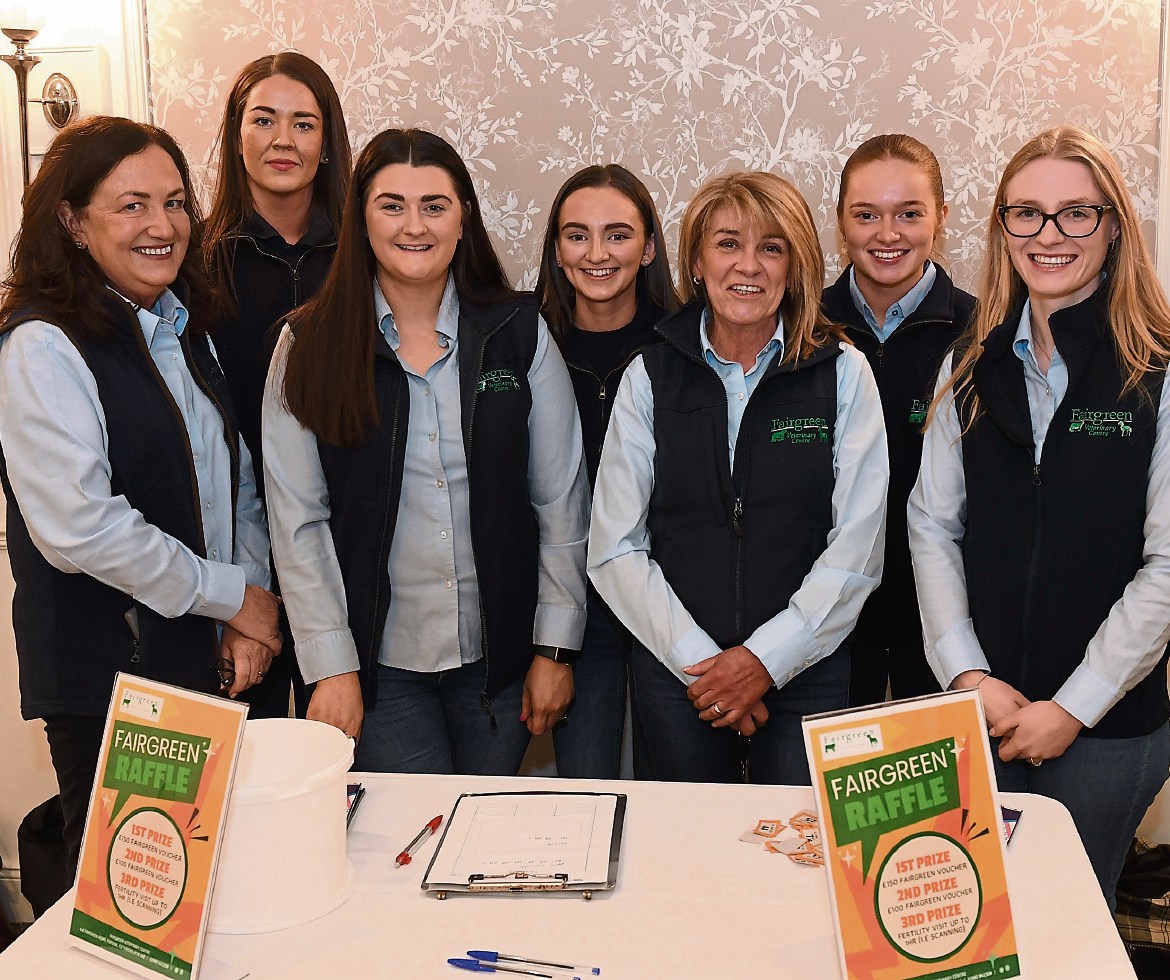
The event last week at the Silverbirch Hotel was coordinated by local veterinary surgeons, John Johnston and John Fitzpatrick, from Fairgreen Vets, Fintona, who welcomed speakers including Peter Howard, from Boehringer Ingelheim pharmaceutical company.
“We decided to have the meeting following quite a few enquiries about the Bluetongue situation,” Mr Johnston said.
“Many farmers have been wondering what they should do to protect their animals and prevent the spread of it.”
Throughout the evening, the speakers outlined the implications and risks surrounding Bluetongue, offering practical advice on what farmers can do to protect their livestock.

Explaining the impact and symptoms of Bluetongue, Mr Johnston said, “As it stands, five cases have been confirmed in Northern Ireland.
“The first had been detected in a meat plant where DAERA were taking random samples to see if they could find evidence of it.
“In many ways, that surveillance has proven to be very worthwhile because it has given us an early indication of what we are dealing with before any further serious outbreaks and no clinical signs were reported on the farms where the disease was discovered.”
Mr Johnston explained that while four more cases have been detected in farmyards throughout the North, the Department of Agriculture, Environment and Rural Affairs (DAERA) have put transient control zones in place in an attempt to prevent it from spreading further.
He also highlighted that the detection of the disease has impacted trade between farmers in the North and South of Ireland.
The disease, which affects mostly cattle, sheep, goats, deer and alpacas, has been known to show symptoms such as high temperatures, discharge from the eyes and nose, increased salivation, ulcers and swelling of the face, lameness and teat lesions.
“One of the issues from a clinician’s point of view is that, yes these symptoms could be Bluetongue, however, any practising vet could probably name numerous other diseases that are associated with similar symptoms,” Mr Johnston explained.
The vet further highlighted that, despite these symptoms being typically associated with the disease, many reports of Bluetongue throughout the UK have suggested that the clinical symptoms have not been as severe as the symptoms recorded in some outbreaks in Europe.
He also explained that the disease can be spread through midges, which will add further risk coming into spring.
“While it isn’t exclusively spread through midges, there is a risk of a further spread as they appear in warmer weather,” he said.
“The good news is, however, that we have a couple of weeks now to try and do something about it.
“There is a commercial vaccine available but farmers need time to put the programme in place to protect both their own animals and to protect the national herd and flock.
“One thing I would say to farmers is that they need to speak to the vet who is tending to their animals.
“They are best placed to risk assess the situation and give the relevant advice.
“Vaccination is an absolute must. Even if there are no symptoms, it is essential to take a proactive approach to prevent the spread.”