





 By
By 
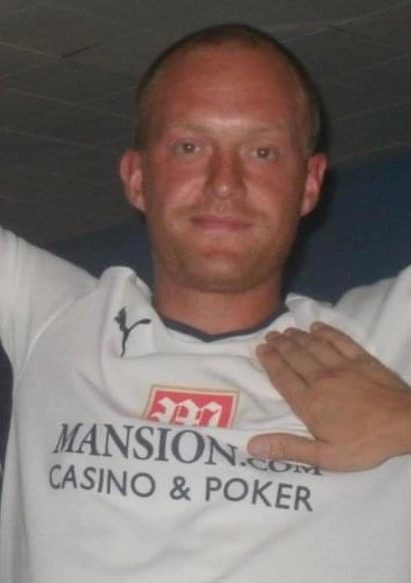
THE family of Dungannon man Niall McDonald (44), who died in a road traffic collision on the Tullyvar Road near Aughnacloy in September 2022, told his inquest that he is ‘deeply missed’ by all who knew him.
In an emotional statement read out at the inquest in Banbridge Courthouse on Friday, Mr McDonald’s daughter Kate described her father as a ‘hard-working man’ who ’loved nothing more’ than spending time with his family.
“Niall was the middle child in a family of seven, and his mother said she couldn’t have asked for a better son,” Kate read from the prepared statement.
“He always saw the good in people and was a massive fan of Tottenham Hotspur Football Club and Tyrone GAA. He attended St Patrick’s College, Dungannon, and worked in construction. He spent 13 years in America and was a great host.
“He was an amazing support, a very positive person, and we all deeply miss him.”
Kate, who works in healthcare, asked the Coroner Anne-Louise Toal to check whether he might have been on blood thinners at the time of his death, as he had been on medication in the weeks leading up to the accident and had previously collapsed at home. The coroner said she would try to obtain this information before releasing her findings.
Also giving evidence on Friday were several police officers who attended the scene of the collision, as well as a dispatch officer and a forensic scientist specialising in road traffic collisions.
The first witness was a civilian PSNI staff member based in Derry, who works as a call handler for 111 and 999 calls. She told the inquest that she had received a call from an unknown member of the public reporting that a man was walking in the middle of the road between Aughnacloy and Ballygawley.
Audio from the call was played during the inquest, but it ended before the caller’s name could be obtained.
The caller said, “The only reason we saw him was because another driver flashed their lights at us.”
The call handler categorised the call as a priority rather than an emergency. She told the inquest that she ‘could have’ labelled it an emergency in hindsight, had more information been provided by the caller.
A PSNI dispatcher also gave evidence, stating that only three pairs of officers were on duty at the time of the collision. She said officers were tasked to the scene as soon as they became available and agreed that classifying the call as a priority was appropriate.
An investigation into the call handling following Mr McDonald’s death found that all staff involved had acted properly.
The initial call was taken just before 11.30pm, with police arriving at the scene of the collision shortly after 12.13am.
An officer who gave evidence said that when they arrived, a member of the public was performing CPR on Mr McDonald, and he described the conditions as ‘dark, cold and dry’.
He said he assisted with CPR while his colleague took statements from witnesses and from the driver involved in the collision.
The officer said the ambulance arrived at 12.37am and Mr McDonald was pronounced dead at the scene at 12.47am.
A community first responder was also present and assisted with CPR using a defibrillator. He told the inquest that he and his colleague had been called at 11.50pm and had exceeded the speed limit to reach the scene as quickly as possible.
A second officer administered a caution at the roadside to the driver of the car.
The driver said he had not seen Mr McDonald, who was lying on the road at the time of the collision and that he had ‘driven over the top of him’. He was breathalysed at the scene and returned a zero reading.
The final PSNI witness was a forensic scientist from the Road Traffic Investigations Unit who attended the scene.
He told the inquest he believed Mr McDonald had been lying prone when the vehicle collided with him, stating that the damage to the car and to Mr McDonald’s clothing indicated he was on the ground at the time of impact.
At the conclusion of the inquest, Coroner Anne-Louise Toal said she would deliver her findings in Belfast on Tuesday and thanked all those who had given evidence.