



 By
By 
PUBS and restaurants across Tyrone were busy on Saturday with people celebrating (or commiserating!) the fact that it was Valentine’s Day, writes Steve Bradley.
As well as being a date synonymous with romance, few would have been aware that February 14 has additional significance in the history of Tyrone – as the day that the county lost its railways.
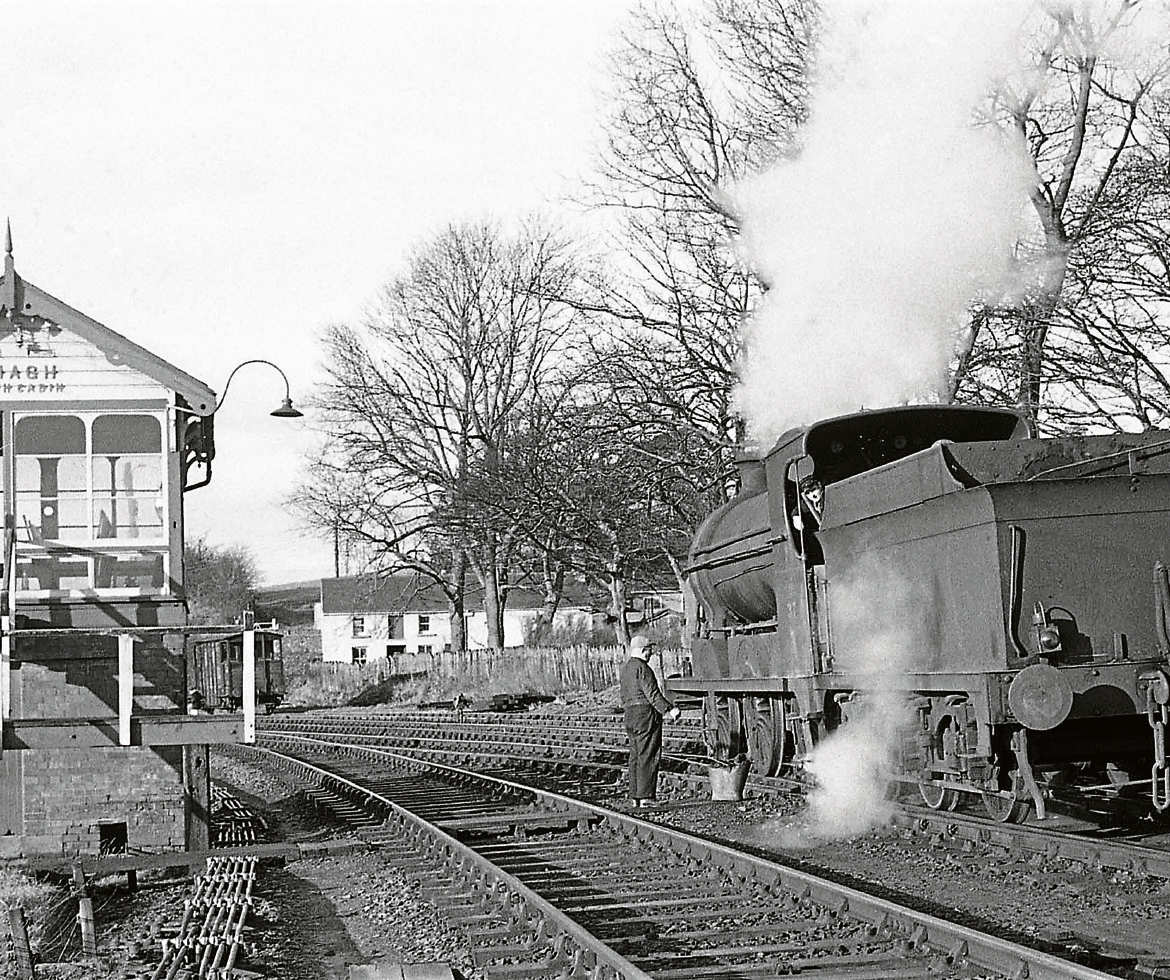
For almost 120 years Tyrone stood at the heart of an extensive rail network across west Ulster – with a number of mainline and branch-line services on both standard and narrow gauge tracks, and even a horse-drawn tram. Passenger rail services had been invented in England in 1825, and by 1834 the technology had reached Ireland with the opening of the ‘Dublin and Kingstown Railway’ (the world’s first commuter rail service). In 1847 – the bleakest year of the Famine – rail made its way to Tyrone and the north west as part of the newly established ‘Londonderry and Enniskillen Railway’.
Its route and construction started at Derry’s old Foyle Road Station on the westbank of the Foyle, and from there traced the river south via Carrigans, Porthall, St Johnston and Carrickmore in Donegal before crossing the river to enter Strabane (which had the honour of being the first station opened in Tyrone in April 1847).
It was to be another five years before it was joined by any others – as Sion Mills, Victoria Bridge, Newtownstewart and Omagh only opened in 1852. Fintona was added to that list in 1853, followed a year later by Trillick and Bundoran Junction – which despite it’s name, was located on the Tyrone side of Irvinestown. Construction of the line finally reached Enniskillen in 1854.
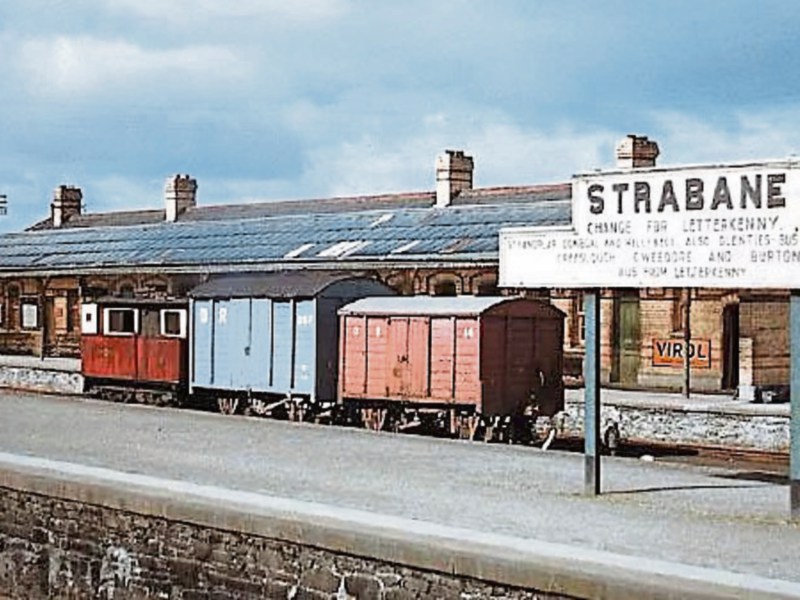
In 1862 the Derry and Enniskillen Railway renamed itself the Irish North Western Railway, and in 1876 merged with the Ulster Railway (which operated between Belfast and Monaghan) to form the Great Northern Railway. It was at this stage that the section of the Derry to Enniskillen line north of Omagh became part of what was known as ‘The Derry Road’ – which was the mainline rail route from the north-west to Dublin and Belfast, via Portadown.
The Derry Road went on to become one of the island’s most popular railway lines and a great commercial success for much of its existence. It was the most important rail route in Ulster for over a century, and helped stimulate significant economy activity all along its route.
The first blow to its fortunes came in the 1920s, when the arrival of motorised road vehicles combined with the global economic depression to severely impact passenger and freight demand.
The end of World War II saw the challenges return and amplify, however these were made worse by the roads-focus of the new Ulster Transport Authority (UTA) in Belfast. It had been established when Stormont nationalised all rail and bus services north of the border in 1948.
The UTA began closing a series of rail lines across the west in the 1950s, which left the Derry Road increasingly isolated. Passenger services at the GNR Cookstown station ended in 1956. Meanwhile the Omagh to Enniskillen line was closed by the UTA in 1957. In 1962 – on the advice of the infamous Dr Beeching, who had closed swathes of rail across Britain – Stormont procured a study on the future of rail in Northern Ireland.
The Benson Report was published a year later, and recommended mothballing the Derry-Portadown line. By that stage it was the last remaining piece of rail anywhere in Tyrone or Donegal – and to prevent any chance of a future comeback, the UTA lifted and scrapped all the track and sold all the land.
And so Tyrone’s ongoing decades of isolation from the island’s rail network began on the February 14 1965 – in what was a St Valentine’s Day massacre for rail across the north-west.
Steve Bradley is Chair of ‘Into The West’, which is the rail campaign for Tyrone, Derry, Fermanagh & Donegal.