





 By
By 
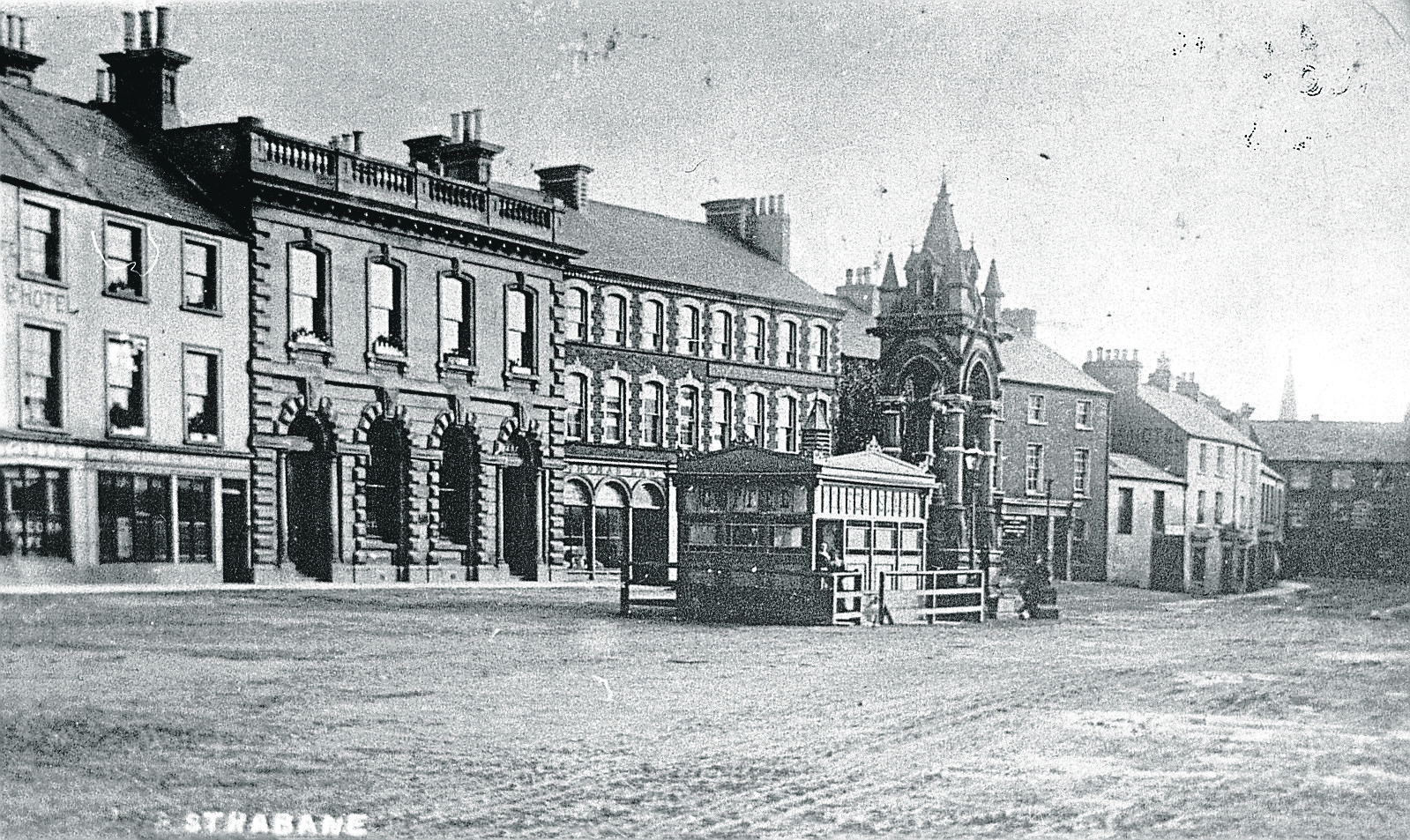
THE Pagoda in Abercorn Square is one of Strabane’s most striking landmarks.
Standing at the heart of the town in various forms for generations, it has long served as a distinctive meeting point – a refuge for late-night sing-songs and a shelter from the rain.
Speaking to the Strabane Chronicle, Michael Kennedy, of the Strabane History Society, explained that the Pagoda was financed with funds donated by the then Duke of Abercorn.
It was intended to be a central resting place – situated amid the town’s commercial hub – where travellers could sit, relax, and enjoy a hot beverage before continuing their journey.
“When the Pagoda was first installed in Abercorn Square there wasn’t any traffic, just horses and carts,” Mr Kennedy said.
“People would have gathered in that area because it was the main hub for markets and retail in the town. It was financed by the Duke of Abercorn and served as a rest stop for travellers before they headed home.”
“Nobody really knows why it was designed as a Pagoda, but I think there may have been a trend at the time for architecture influenced by the Far East, which is probably why that style was chosen.”
The location of the Pagoda has changed over the years. Originally positioned in the middle of the road, it was later moved after being deemed a safety hazard for pedestrians and vehicles.
It was also removed briefly in the mid-to-late 1960s before being refurbished, with a new structure replacing the old one.
There are now concerns over what will happen the Pagoda as part of plans for a new public realm scheme in Strabane.
Mr Kennedy, who once lived on Abercorn Square, recalled many memories attached to the landmark.
“It has always been a place where people took shelter from the rain. I used to live across from the pagoda and remember people sleeping in it after missing the last bus back to Derry, or groups taking shelter there after a night out – singing songs and enjoying themselves,” he said.