





 By
By 
TWENTY-FIVE years ago, the local farming world was gripped by one of the most devastating agricultural crises in modern history.
Foot and Mouth Disease (FMD) triggered a global emergency that led to the culling of more than six million farm animals across the UK. Ports were closed, villages and towns were effectively sanitised, a general election was postponed by a month, and the disease delivered a long-lasting £8 billion blow to the economy.
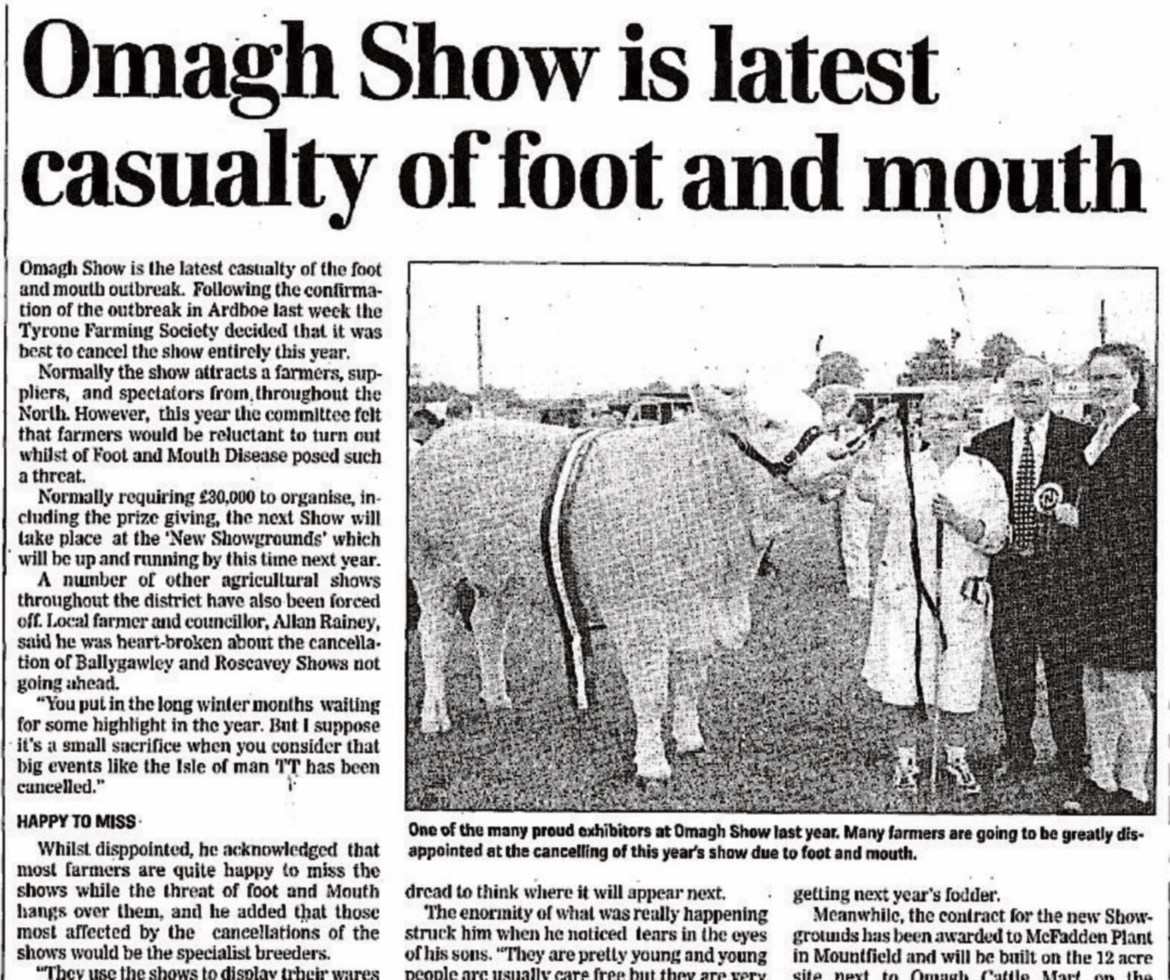
In Northern Ireland, there were just four confirmed outbreaks, including one in Ardboe. However, the preventative measures introduced were sweeping. Ports were shut, sporting activity ceased, livestock marts were halted, and even the annual Drumcree protest was postponed as authorities moved to prevent the disease from spreading.
Documents released from 2001 show the scale of concern at the time.
Writing to the Stormont Committee, then Agriculture Minister Brigid Rodgers said she did not believe there was a ‘significantly increased risk’ of further spread, provided farmers continued to act ‘sensibly and responsibly’.
“(The RUC) are operating random mobile patrols in the border areas within and close to the Surveillance Zones and will continue to do so for as long as is necessary. If staff on the ground have concern that the passing traffic may be carrying livestock they will pass the information to the police so that action can be taken away from the border checkpoint.”
Dunamanagh cattle farmer William O’Neill, who lived through the crisis, says the experience still resonates today, particularly as farmers now contend with threats such as Bluetongue and bovine tuberculosis.
“Brigid Rodgers worked very closely with the farming unions on how best to approach the issue, and I believe that direction is what saved us from what was happening in England,” he said.
“It was a bit like Covid in that there was very little movement. Farmers kept to themselves, marts were closed, and the only option for income was sending cattle straight to slaughter.
“In the grand scheme of my farming career it was a short period, but it was intense. Since then we’ve faced Bluetongue, TB and other ongoing challenges that continue to affect the farming world.”