





 By
By 
IN the dark mists of the past, before the emergence of innumerable computer games, mobile phone gambling or YouTube turning us all into atomised individuals skulking in different parts of the house, people were actually often involved in communal activities, writes Paul Moore.
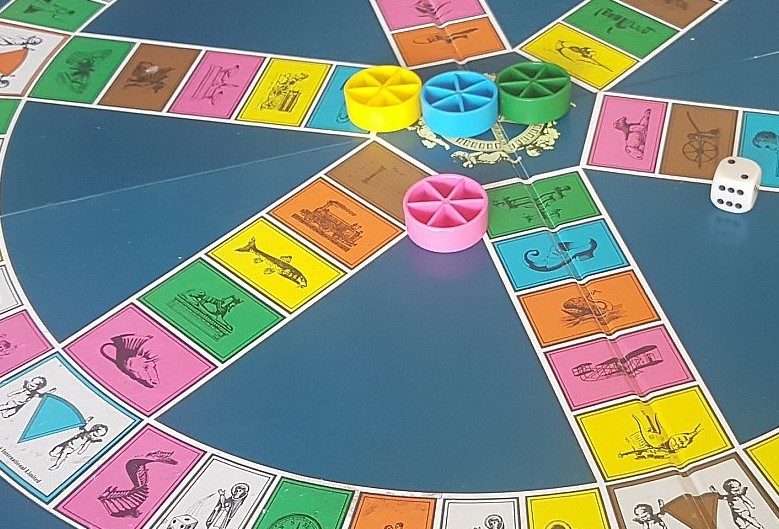
The simplest of these was conversation but, on occasion, especially if one had visitors, the night would be spent playing something called Trivial Pursuit.
Essentially this was a board game based on general knowledge, the object being to gain coloured slices of a tiny cake by answering questions correctly, the winner being he or she who completed the cake first. I both loved and hated Trivial Pursuit.
I loved it because it was communal and the interaction with other players was always entertaining. I hated it because it was communal which meant that it was possible someone else could actually win the game.
For me this was beyond the bounds of acceptability and it got to the point where I was actually training for Trivial Pursuit, spending time reading encyclopaedia and scouring newspapers before every weekend tournament. The very act of calling it a tournament means I was taking it way too seriously.
As you might imagine those willing to play the game with me became increasingly smaller until there were only two left. I suspect one of their greatest blessings was the advent of the web and the decline of board game playing.
Except it appears board game playing did not decline. The effortlessly cool of Generation Z apparently spend much of their free time playing various board games.
This may be part of the more general move back to analogue which can be seen in the emergence of a new interest in vinyl records and cassette tapes and in the fact that many young people now have mobile phones which do not connect to the web.
I have no idea what these games involve and I am loathe to find out as you can imagine from my experience with Trivial Pursuit. Strangely none of my friends (those two that are left) nor my family are encouraging me to investigate the present board game phenomenon.
Those who do play will no doubt be delighted with the newest entry to the market, a USA endeavour called The Great Hunger: Ireland’s Tragedy in the 19th Century. In truth it is not the kind of pithy name which might attract the young and hip but let us assume their interest is piqued enough to seek more detail.
The game is played by two to five people representing ‘families of tenant farmers and field hands’ and is played on on a Risk-style map of Ireland. In the game you can gain points by leaving the land and taking a job in a factory or by emigrating to, of course, the USA.
According to the rules the person with the name closest to Irish ancestry goes first or failing that he or she with the most Irish sounding name even though that person might actually be Ulster-Scots.
The winner – and how I wish I was making this up – is the person with the largest surviving family across Ireland and the USA after the blight has abated. Now I know my record with Trivial Pursuit is less than glorious but am I completely wrong in thinking that the whole concept of The Great Hunger is somewhat insensitive or have all the teachings of the Great Hunger down through the years been incorrect?
Perhaps Generation Z have not been as damaged by the memories of 1845 as earlier generations and if so they can relive it by paying 47 euro to a Kickstarter site which means that the makers are, in fact, gaming the game. I personally hope they monumentally fail to win that particular game.