



 By
By 
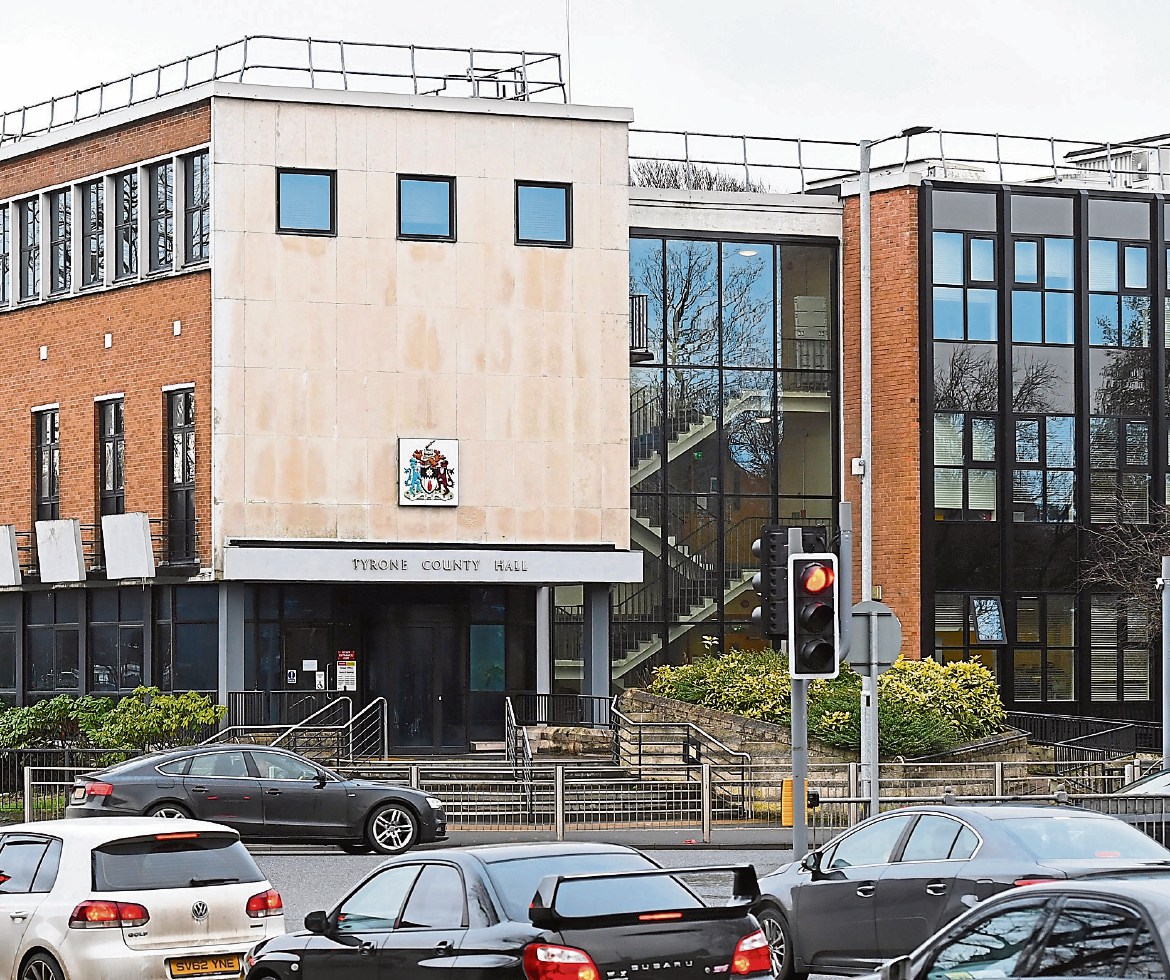
PLANS for a major refurbishment of the Tyrone County Hall in Omagh are unlikely to increase the risk of flooding at the historic building, a report has concluded.
Last week, it emerged that the adjoining site of the former Scott’s Mills in Omagh was not being considered as a potential alternative town centre location for a new Sainsburys store because it was an area ‘undefended’ from flooding. The area had been earmarked for a £25 million retail development.
However, in documents submitted as part of the application for the Tyrone County Hall transformation, the site of that public administration building is shown to be suitable for the work because it is classed as a ‘minor development.’
The Flood Risk Assessment states that development in locations including that occupied by the County Hall is only permissable under exceptional circumstances or for minor development.
“In line with Local Development Plan requirements, it is considered that this Flood Risk Assessment demonstrates that all sources of flood risk to and from the proposed development have been clarified,” said the technical director and civil engineer from Doran Consulting who completed the document.
“There are adequate measures to manage and mitigate any increase in flood risk to the proposed development or elsewhere. Food proofing measures have been incorporated into the design of the building.”
Records compiled as part of the assessment show that the site of the County Hall has been flooded on a number of occasions. One of the most notable was in 1969, but others occurred to a lesser extent in more recent years.
Flood defences were erected in the area following the heavy rain which devastated the Campsie area of the town in 1987.
Tyrone County Hall, which is located at the junction of Sedan Avenue and Mountjoy Road, is currently occupied by a number of Stormont Departments, including the departments for Infrastructure, Communities and Environment and Rural Affairs.
Officials from the Health and Safety Executive are also based in the building which was first constructed in the early 1960s.