Clanabogan

  • Family to seek further answers over Clanabogan man’s death

    Family to seek further answers over Clanabogan man’s death

    THE family of the late Chris Keyes have said they will continue to seek further medical answers following his inquest, despite the coroner ruling out a link between his death and the AstraZeneca Covid-19 vaccine.

    Mr Keyes, who died suddenly in 2021, was found to have died from multiple organ failure, destroyed red blood cells (TMHA) and small blood clots caused by the rare condition thrombotic thrombocytopenic purpura (TTP).

    At a two-hour hearing at Laganside Courthouse yesterday, the coroner concluded that there was insufficient evidence to attribute his death to the Covid-19 vaccine – a conclusion the family remain ‘very concerned’ about.

    Following the inquest, a statement was issued by solicitor Conor Sally, who acted on behalf of the Keyes family.

    Thanking the coroner, her staff and the medical experts who contributed to the hearing, the family pledged to investigate the matter further.

    They were told that TTP was a major cause of death and that a genetic cause had been ruled out.

    The inquest also heard that drug-induced causes linked to medication prescribed by Mr Keyes’ GP or provided by the hospital were excluded as contributing factors.

    “The only other drug inducement Chris received was the Covid-19 vaccinations,” the statement said.

    “While there was a short time period between him receiving the vaccinations and his death, the family remain very concerned that those vaccinations could have played a significant role in him contracting TTP, ultimately leading to his tragic sudden death.”

    The family said that although the coroner found insufficient evidence to make that link, they now intend to investigate the matter further through appropriate medical channels in the hope of gaining greater clarity.


  • Social care heroes celebrated at Clanabogan event

    Social care heroes celebrated at Clanabogan event

    The vital, often unseen, work of social care practitioners took centre stage at a special event held at the Camphill Community in Clanabogan on Wednesday, where their impact on vulnerable lives was celebrated and championed.

    Ciara Rodgers, manager of the Omagh Centre, which helps those with mental disabilities. spoke passionately about the dedication and difference social care workers make every day, highlighting their role in supporting people with mental disabilities across the region.

    “Our workforce at the Omagh Centre and elsewhere really care about the work they do,” she said. “We want to ensure social care practitioners are valued for their skills and given opportunities to develop professionally.

    “This is a great celebration of the amazing work happening in the community and in care settings. The life-changing work is making a real difference to people’s lives.”

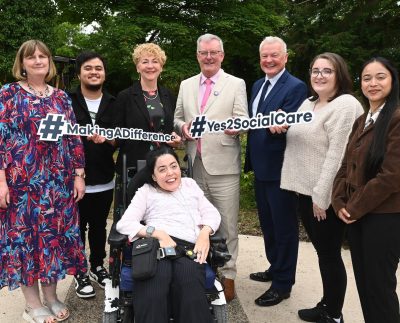
    The launch of the ‘Social Care – Making a Difference’ campaign was attended by Health Minister Mike Nesbitt, and shone a light on the 42,000-strong social care workforce in the North, working for almost 500 employers.

    Dr Agnes Lunny, campaign chair and chief executive of Positive Futures, said the launch was ‘hugely important’ to ensure social care workers are recognised and encouraged to stay in the sector.

    “Increasingly, we need more people to enter this workforce and describe how amazing it is,” she said. “Recruitment is tough, but once you’re in, people stay because it’s a vocation.

    “If you have the dedication, empathy and commitment to make a difference, this is the job.

    “It’s also clear that social care practitioners aren’t getting paid what they deserve, so I’m delighted that the Minister for Health has made it very clear we will at least be able to pay them a real living wage.

    “We need to make sure that getting the care isn’t a postcode lottery and that rural communities also receive that support.”

    value of social care

    Details of the total direct, indirect, and induced value of the social care sector were recently published in a report by the Northern Ireland Social Care Council, revealing the sector’s worth exceeds that of the Finance and ICT sectors.

    Declan McAllister, interim CEO of the Social Care Council, said he was always inspired by the dedication shown by social care practitioners.

    “However, their impact and that of the sector goes further still, including their contribution to the economic and social health of Northern Ireland. At the heart of this campaign is the recognition that every day in social care is different, offering a dynamic and fulfilling career path for those who choose to join a sector vital to the NI economy.”

    The campaign aims to attract individuals passionate about making a positive impact in their communities through a career in social care.

    It has been created by social care leaders, delivered by the Northern Ireland Social Care Council, and supported by the Department of Health.

    The campaign features stories about real experiences from those working in social care, providing care and support for children, families, the elderly, and those with mental and physical health needs.

    Health Minister Mike Nesbitt, who attended the launch, said the campaign is both a way to thank the social care workforce and to raise awareness about the increasing complexity of the needs of those they support.

    “Over the last few months, we have significantly invested in the social care workforce, including releasing our first-ever Social Care Workforce Strategy and implementing the Care in Practice Framework,” he said.

  • Clanabogan man takes on tough challenge for medical aid charity

    Clanabogan man takes on tough challenge for medical aid charity

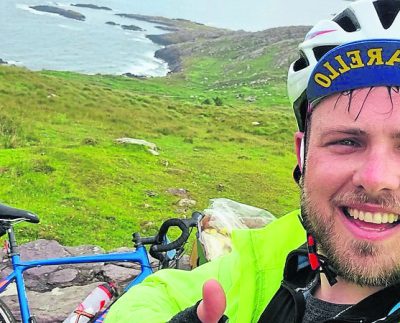
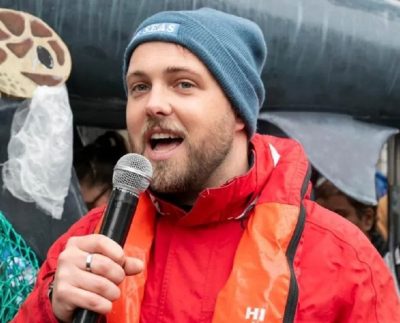
    CLANABOGAN native Dónal Griffin is preparing to take on the gruelling 170km Ring of Kerry Charity Cycle this July in a bid to raise funds for Medical Aid for Palestinians (MAP), an international humanitarian charity.

    Speaking to the Ulster Herald, Dónal explained that he was inspired to undertake the challenge not only to push himself physically but also to raise vital awareness and support for those suffering in Gaza.

    “It’s hard to watch the images and footage coming out of Gaza and not feel a sense of helplessness,” he said. “That’s why I want to do something – even a small thing – to help ease the human suffering there. Every donation, no matter the size, helps MAP reach more people and save more lives.”

    MAP delivers emergency medical care and essential supplies to Palestinians affected by conflict and displacement. The organisation also supports mental health, maternal care, and long-term healthcare infrastructure across Gaza, the West Bank, and Lebanon.

    According to the World Health Organisation, only 16 of Gaza’s 36 hospitals remain partially operational as of January 3, 2025, with the rest forced to close due to ongoing Israeli airstrikes and blockades. Human rights organisations and UN-backed experts have accused Israel of systematically targeting Gaza’s healthcare system during its 19-month war on the territory.

    Dónal, one of Ireland’s leading marine biologists, currently works as marine policy officer and campaign coordinator with Fair Seas, a group advocating for the protection of Ireland’s marine environments.

    He will take on the Ring of Kerry route on July 5.

    “It’s a beautiful cycle, but also a real challenge,” he said. “I’ve been training hard and will be ready when the day comes, but no matter how prepared I am, I know it’s going to be tough.”

    To support Dónal’s fundraising campaign for Medical Aid for Palestinians, visit his JustGiving page at www.justgiving.com/page/donal-griffin-rokcc-2025 or find the link on his Facebook page.

  • Councillors to visit site of proposed pet crematorium

    Councillors to visit site of proposed pet crematorium

    A DECISION taken last month by local councillors to approve controversial plans to build a pet crematorium at a scenic location near the Pigeon Top outside Omagh has been overturned.

    Local councillors will now make a visit to the proposed location of the facility on the Tattykeel Road before deciding on whether or not to give it the go-ahead.

    Following the approval of the crematorium last month, a specially-convened Fermanagh and Omagh Council committee subsequently recommended that the initial decision was re-examined.

    There are widespread objections to the proposed facility, which will see small pets being incinerated at temperatures reaching 800 degrees Celcius.

    Residents living close to the proposed site for the crematorium claim that it is being ‘imposed on them’ and would be built in a tight-knit local community on the Tattykeel Road.

    However, applicant Paul Kelly said he has spent thousands of pounds developing the proposal and is willing to meet objectors.

    He said that the idea for the pet crematorium was one that he had been considering for more than a decade.

    At a meeting yesterday (Wednesday), the council’s planning committee overturned the decision taken last month to approve the crematorium.

    They will now look again at the proposal, hold a site meeting and then reconvene to discuss it next month.

    Cllr Stephen McCann said that the application was a significant one and deserved the scrutiny that would come from visiting the proposed site.

    However, Fermanagh-based councillor Robert Irvine proposed that the original decision to approve should stand.

    A vote on deferring a decision on the crematorium until November was taken and passed after the casting vote of committee chair Cllr Tommy Maguire.

    It means that councillors are now expected to visit the site.

    They will then meet again in November to decide whether the proposal is granted approval or refused permission to proceed.

    Cllr Allan Rainey abstained.

    He told the meeting that he had key questions about the proposal which he wanted to see clarified.

  • Clanabogan man leading the fight to preserve Irish seas

    Clanabogan man leading the fight to preserve Irish seas

    Growing up in Clanabogan, Donal Griffin wasn’t exactly surrounded by the sea. In fact, his childhood included just the occasional trip to Donegal’s beaches or the odd holiday by the coast.

    Yet today, Dr Donal Griffin is one of Ireland’s leading marine biologists, playing a crucial role in the national campaign to protect the country’s seas and marine life.

    How does someone from a landlocked county develop such a passion for marine biology and conservation? For Donal, his journey to the sea started with education and hands-on experience that sparked a lifelong fascination.

    “It wasn’t until I went to university that my interest in the sea came,” Donal explains. “It was really after I went out on boats and got to see sea life for myself up close that I fell in love with sea life and conservation.”

    Donal’s interest in marine biology began at Queen’s University Belfast, where he studied for his undergraduate degree. It was during his university years that he developed a deep passion for marine ecosystems, spending time on research vessels and observing marine wildlife firsthand. The direct interaction with sea life fueled his drive to protect these fragile environments.

    “It was really after I went out on boats and got to see sea life for myself up close that I fell in love with sea life and conservation. I began to focus my studies on marine wildlife policy and did a masters degree specialising in basking sharks. This has led to me becoming the campaign coordinator for the Irish Basking Shark Group. In that role, the group and myself were able to ensure a change to the law, meaning that basking sharks are now a protected wild animal under the Wildlife Act.”

    After his master’s, Donal pursued a doctorate, focusing on jellyfish and their importance to marine ecosystems. His research not only highlighted the key roles jellyfish play in ocean life, but also underscored the necessity of protecting marine environments more broadly.

    Leading the Charge with Fair Seas

    Today, Donal is the marine policy officer and campaign coordinator at Fair Seas, a campaign group working to protect Ireland’s marine environments. The group’s primary goal is to have 30 percent of Irish waters designated as Marine Protected Areas (MPAs) by 2030. MPAs are sections of the sea set aside to protect habitats, species, and natural processes critical for the health of marine ecosystems. Currently, less than 10 percent of Ireland’s waters are protected, leaving a majority of marine life vulnerable.

    “We have been making the case that the Marine Protected Areas Bill is essential to protect both marine life and our sea ecosystems,” Donal said. “This bill will mean that the Irish government has more legislative powers to introduce marine protected areas, which would make up 30 percent of our waters.”

    Donal’s role with Fair Seas involves advocating for the bill and meeting with key political figures to push for stronger protections. He has met with both Taoiseach Simon Harris and Tánaiste Micheál Martin to discuss the bill’s importance, as well as other prominent politicians.

    This summer, Donal was also invited to a garden party hosted by President Michael D Higgins, a vocal advocate for environmental protection, as part of his work with Fair Seas. “During the summer, I was one of those invited as part of a Fair Seas Ireland group to meet him (Higgins), and he spoke fantastically about conservation.”

    A Growing Movement for Change

    Fair Seas’ campaign is gaining momentum, and Donal has been at the forefront of raising public awareness. He has participated in high-profile protests, including a recent demonstration at the Dáil, and has been interviewed on RTÉ and TG4 to discuss the urgent need for marine protection. In his view, protecting Ireland’s seas is not just about preserving marine life – it’s about safeguarding the planet.

    “The ocean generates 50 percent of the oxygen, so preserving our seas and oceans isn’t just about preserving sea life; it is about saving all life.” Donal’s journey from landlocked Tyrone to marine conservation advocacy may seem unlikely, but it is a testament to the transformative power of education and experience. His firsthand encounters with marine life have fueled his determination to protect Ireland’s seas for future generations.

    “During university, I realised how essential it is to ensure that our coast lines are protected. Currently only nine percent of Ireland’s coastlines are protected, and we cannot lose any more of our native animals.”

    For a man who grew up far from the sea, Donal Griffin’s journey to becoming one of Ireland’s leading marine biologists is proof that passion and dedication can lead to transformative change.

  • Pet crematorium plans face fresh scrutiny despite approval

    Pet crematorium plans face fresh scrutiny despite approval

    A DECISION to grant planning approval for a pet crematorium at a scenic location outside Omagh has been ‘called-in’ by six local councillors.

    The green light for the proposal was given at a meeting of Fermanagh and Omagh District Council’s Planning Committee last month. However, the project will now be re-examined by a special ad-hoc council committee.

    Councillors Barry McElduff, Colette McNulty, and Ann-Marie Donnelly of Sinn Féin, Stephen Donnelly of the Alliance Party, independent councillor Josephine Deehan, and SDLP’s Adam Gannon have signed the call-in letter.

    The councillors expressed concerns that the application did not receive adequate consideration of all the relevant facts and issues. “We believe that a flawed decision was made because of this lack of due consideration,” they stated.

    During the recent planning meeting, applicant Paul Kelly, who invested thousands of pounds in the proposal, defended the crematorium project.

    He explained that he was motivated by the “distressing and traumatic time” people face when losing a pet and said he was willing to meet with objectors to address their concerns.

    Despite this, local residents expressed ‘profound disappointment’ with the approval.

    Objections

    They claim the decision has sparked significant concern and frustration, with many feeling their objections were disregarded despite what they describe as overwhelming local opposition.

    “One major concern is that, to the best of the residents’ knowledge, no site visits were conducted during the application process,” the residents said in a statement.

    “This lack of direct engagement with the area has led locals to question how the planning committee could fully understand the rural character or appreciate the significant visual impact that a ten-metre flue would have on the surrounding landscape. These unresolved concerns have only deepened frustration within the community, as many feel their voices have been ignored.”

    The special ad-hoc committee is expected to meet soon to reassess the call-in application.

  • Celebrating 40 years of Camphill Community in Clanabogan

    Celebrating 40 years of Camphill Community in Clanabogan

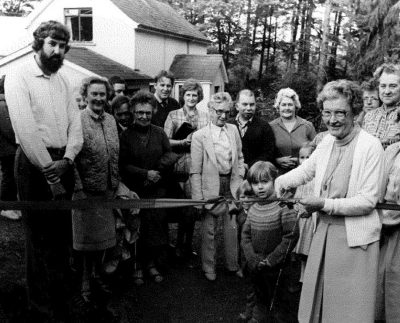
    IT was a fine day in August 1984 when a group of 24 adults and children arrived at Brookfield House, Clanabogan, Omagh, having travelled from the east coast of Northern Ireland.

    They had come to establish a new Camphill Community in the west of the country, inspired by the Camphill work which already existed in Co Down.

    They wanted to build up a new home together with adults with a learning disability where everyone could contribute and thrive.

    It was laborious work that involved renovating buildings, digging trenches, rebuilding a derelict farm and the general housework needed in daily life.

    On the human level too, relationships were formed and the rhythms, routines and structures of community life established.

    Speaking on what is Camphill Community’s 40th anniversary, founder Catharine Linde recalled, “I remember the tireless devotion of our villagers who helped us through every challenge with steady and ready acceptance.”

    From the beginning the pioneers wanted the community to be part of local life and a connection with Omagh and its surroundings was already there.

    The Faux family, who had lived at Brookfield, were known and respected and Elsie’s son Donald had gone to live in a Camphill community after he suffered a brain injury from an accidental fall. A committed group of local people formed a circle of help and support around the community.

    For their part, the founding group of ‘co-workers’ brought something new to Omagh: The impulse of help and healing for people and nature and the earth which was enshrined in the Camphill Movement, a worldwide organisation of almost 100 centres which all subscribe to the ethos initiated by the Austrian doctor Karl König in Scotland in 1940.

    This impulse, which includes all kinds of people irrespective of religion, race, nationality or disability, was one of the small yet brave attempts to bring peace and healing in a Northern Ireland which was still suffering from the Troubles.

    In the words of founder Jens-Peter Linde,“We were graced by being accepted by both sides of the divide.”

    For many years Camphill Clanabogan was a place where people could meet, simply as individuals, as fellow human beings.

    From the beginning care for the land was fundamental and holistic, biodynamic methods were used. The farm provided the community with milk and beef and the gardens produced vegetables and soft fruit.

    Innovation

    Over the years more land was acquired and innovative methods such as airdried hay were introduced.

    More buildings were erected, the population grew and connections widened. Pioneering efforts in sustainability and energy production put Camphill Clanabogan at the forefront of these issues which were increasingly prominent in society.

    What began as a small informal playgroup has, over more than 30 years, developed into Puddleducks Playgroup, providing early years education for 22 local children and winning awards for its excellence.

    Crafts such as weaving, wood carving and pottery foster people’s skills and artistry.

    Care and support for people with learning disabilities did not stand still either. More people joined to live and also attend by day.

    The community offered a model which prioritised independence, choice, human relationships and personal fulfilment. It was a home and workplace where people belonged, found friends and felt safe and valued.

    From the 1990s social care became more regulated and the community had to learn to adapt and conform without losing its identity and character.

    The social and domiciliary care provided is consistently validated and approved by funders and regulators.

    The Community also employs many local people to support the work, such as social care support workers, administrative staff, cleaners and maintenance personnel.

    As we celebrate 40 years’ life and work we must also create a vision for the next phase of the community’s existence. Co-founder Jens-Peter Linde said, “The challenges of the wider society cannot remain outside the borders of Camphill.”

    Our many international volunteer workers bring a fresh wind and take home a deep life experience.

    In 2020 Camphill Community Clanabogan was honoured to be awarded the Queen’s Award for Voluntary Service and its citation expresses the aims and values it upholds, ‘Working out of love for people and the earth as a sustainable and inclusive life-sharing community.’

  • Fortunes and Misfortunes at the Alley

    Fortunes and Misfortunes at the Alley

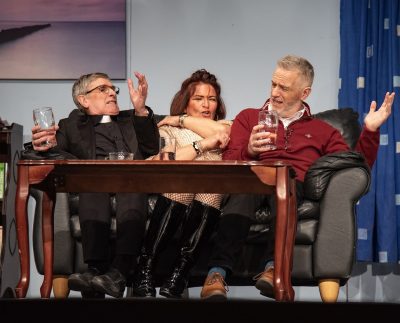
    CLANABOGAN Drama Circle is bringing its award winning production of the contemporary comedy, ‘Fortunes and Misfortunes’ to the stage of the Alley Theatre next week.

    Written by Irish playwright Jimmy Keary, the opening act of the play is set in The Cosy Corner Café with Daisy Fortune played by Veronica McAfee sharing her disillusion with the drudgery of life as a waitress under the watchful eye of café owner Gloria Harte played by Nora O’Neill.

    Veronica is joined on stage by Aoife Clerkin who plays the irresponsible and grouchy waitress Gina Berry. Gina is most dismayed with the lack of romance emanating from Daisy’s son Nathan played by newcomer Ruairí Hanratty. In spite of the devoted attention from his mother and prospective girlfriend, Nathan’s affections lie in his beloved pet lizard Kylie and this leads to much chaos and comedy.

    Emma Pearson and Marie Hague are co-directors of the production and are delighted with the mix of drama regulars and newcomers to provide an abundance of comedic moments. A family friendly comedy not to be missed, Clanabogan Drama Circle guarantees a wealth of laugh-out-loud moments in this mad-capped, farce-like, hit comedy!

    The performance takes place on Saturday April 27. Tickets to be purchased through the Alley website.

  • Splashing into Puddlefest

    Splashing into Puddlefest

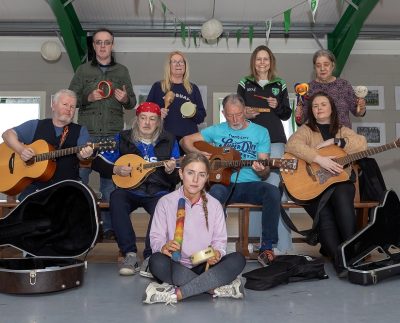
    From sweet guitar sounds to swooning choirs, angelic voices, face painting, delicious bakes and more, it will soon be time for you to hop, skip and jump into this year’s ‘Puddlefest’ music festival.

    Organised by Friends of Puddleducks Playgroup and Friends of Drumragh Sarsfield GAC, the tuneful event is now the 15th of its kind, and is one not to be missed – especially if you are a music lover.

    The festival will take place on Saturday, April 20 at Clanabogan Park, and all proceeds raised on the day will be shared between two local organisations: Puddleducks Playgroup and Drumragh Sarsfields Football Club.

    From 10am until 6.30pm, there will be a combination of familiar faces and new acts to entertain the crowd and to keep the good spirits up.

    The entertainment extravaganza also welcomes back All Saints Primary School; Omagh County Primary School; Moore Brothers; ‘Harmonise’ Choir; Tumbleweed; Gerarda McCann; Dave McKervey; Sean Curran; Lee Cheung; Ciaran McClean; Stone Resistance; The Woodburners; The ‘Rock and Blues Jam Band; and Doyle Mills.

    New to Puddlefest this year are exciting new group, ‘The Proper Gandhi’s’; Young Guitar instrumentalist, Caleb Mills; up-and-coming young violinist, Matthew Kane; talented singer/songwriter, Lorraine Simpson; multi- instrumentalist, Mairead Lynch; and much, much more.

    In addition to the main stage programme, there will be an ‘open mic-style’ outdoor performance area operating between 12 noon and 3.30pm, where beginners and more experienced musicians can turn up with their instrument to play in an informal setting.

    As well as the considerable musical events happening on the day, there will be various side events and stalls both indoors and outdoors to keep all the family entertained.

    Expect a pleasing range of bric-a-brac, mouth-watering cakes, face painting, Gaelic taster games, a ‘Football Dartboard’, and various food and drink stalls for coffee, crepes, burgers and more.

    Speaking to the UH, musician and event organiser, Doyle Mills has encouraged everyone to come along and enjoy the fun.

    “This year’s Puddlefest should be a great family day out in beautiful surroundings with lots for all ages to do with a backdrop of the finest music Omagh has to offer,” he said.

    “Please come and support Puddleducks Playgroup and Drumragh Sarsfields Football Club: Two worthy organisations which are both the backbone of the local community, and enjoy a fun-filled day of music and craic.”

    ‘Puddlefest’ will take place on Saturday, April 20 at Clanabogan Park from 10am to 6.30pm. Admission is free, although donations are encouraged by filling the many buckets around the area.

  • Camphill Clanabogan: A biodynamic farm outside Omagh

    Camphill Clanabogan: A biodynamic farm outside Omagh

    Tyrone is a county known for its rich farming history. Generations of farming families wear their rural, agricultural roots like a badge of honour and pride – respecting the traditions and methods of ancestors who farmed the land long before them.

    With this idyllic view of the local agricultural sector in mind, it may be surprising to hear that Tyrone was recently named the eighth-worst county in the UK for the large numbers of animals confined indoors or without access to pasture in so-called ‘factory’ farms.

    According to figures released from animal welfare organisation, Compassion in World Farming (CIWF), animals being reared in indoor systems in Tyrone include more than eight million meat chickens, 604,500 egg hens, 100,000 other poultry (ducks) and 25,900 pigs.

    The campaign group has warned that the rise of this intensive farming model has meant that animals can spend their lives in barren barns or cages, suffering from overcrowding, often lacking access to fresh air and natural light.

    With ‘factory’ farming processes enabling the production of ‘cheap’ meat, CIWF has claimed this has led to overconsumption of red and processed meats in many developed countries, linked to a number of serious health-related conditions, such as heart disease and diabetes.

    Campaigners further believe that the current agricultural system is driving climate change, impacting on nature and is the main cause of river pollution.

    DIFFERENT

    But one local farm taking a radically-different approach to this intensive model is located in the townland of Clanabogan, several miles outside Omagh.

    Focusing on a healthy, sustainable food and farming system, the Camphill Community is home to 80 residents with learning difficulties.

    It is not only a warm and nurturing environment for its residents, but also for the animals who call the biodynamic farm and organic garden their home. The innovative farm, which has roots in the area since 1984, is currently managed by Seamus McCrossan, a former chef from Strabane.

    Mr McCrossan, who has worked at Camphill for the last seven years, admitted that they had “quite a unique way” of farming.

    “We have pedigree Shorthorn cows and we’re milking 16 of those all for internal use for the 80 people that live here. They’re not a huge yielding breed but the quality of their milk is very high – high in protein and butter fat. We pasteurize our own milk and when we have enough milk we would often make butter, cheese – even yogurt,” Seamus said.

    Cows line each side of the barn at Camphill. On the left are the milking cows, while to the right are a mixture of replacement heifers and beef cattle.

    Seamus said, “Again, we rear all our own beef, just for internal consumption – there is 80 people to be fed here every week so we consume quite a bit internally.”

    The cows graze on barn-dried hay.

    ‘ETHICAL’

    The farm manager said, “The quicker you can dry hay the more nutrients you’re saving. Then we’ve a drying system in the barn where we can blow air up through the hay.

    “So we bring the hay in almost dry from the field and then finish it off in the drying system. We have had it tested and it is a lot higher in nutrient value than the likes of round bale silage.

    “We are trying to be ethical, sustainable and it is a bio-dynamic farm so we have done away with all the plastic from the round bale silage, plus we don’t have the run off the effluent from the round bales – It is just a greener way of doing it.”

    Seamus admitted there was a cost to drying the hay in the barn before adding that wrapping bales was costly as well.

    The drying system is the only one of its kind on the island, according to the farm manager.

    Seamus said the farm was as much about providing a meaningful work life for the adults with learning difficulties who live at Camphill as it was about trying to be sustainable and producing their own food.

    “We are also putting solar panels on the entire length of the shed so hopefully that will provide enough electricity to run the entire hay drying system and have surplus to use for energy consumption in the houses below.”

    Seamus is hopeful that these panels will be erected later this year.

    Focusing on the farm’s milking parlour, the farm manager said their oldest cow was 13 and still ‘performing well’.

    He said, “On a conventional farm you would be lucky to have a cow that’s five or older because they are just forced so much early on for maximum yield that they don’t last that long.”

    At Camphill they also keep their own pigs, and have recently set up facilities for free-range chickens to provide eggs for the community living there. The site also boasts two large greenhouses and external vegetable crops, to grow organic fruit and vegetables for the residents.

    ‘EXTRA STEP’

    Seamus summarised, “It’s a biodynamic farm which takes organic an extra step further. We feed back to the land in a self-sustaining cyclic system without a need to bring in external products.

    “We don’t use fertilizer; we use all our own manure and grow nitrogen fixing crops like lupines and clover in order to feed back to the ground to keep it sustaining itself.”

    Another member of the staff at Camphill, Una Brogan, voiced her worry at the quantities of animals being ‘factory farmed’ in Great Britain and Ireland.

    “It’s worrying to hear that eight million animals are being farmed in Tyrone at a time where we should be trying to move toward a model that’s a lot more small scale and focused on local production,” she began.

    “We are actually destroying our local ecosystems by this kind of intensive farming.”

    “There are huge environmental costs to intensive farming. You’re going to have a lot of off-run of nitrates that’s going into the water courses and polluting them.

    “It’s also causing problems like we saw last summer in Lough Neagh which are really detrimental to biodiversity and wildlife.

    “I think we can move towards smaller-scale farming if there is a mindset change away from profit towards thinking of doing things on a more human scale and a more environmentally-friendly scale – a way that’s friendlier to animals as well.

    “There should be support for people who wish to move toward those kinds of models and I really hope it’s something that we will see happening.”